Wednesday, May 22, 2013

Wacky Wednesday - Bear Minimum

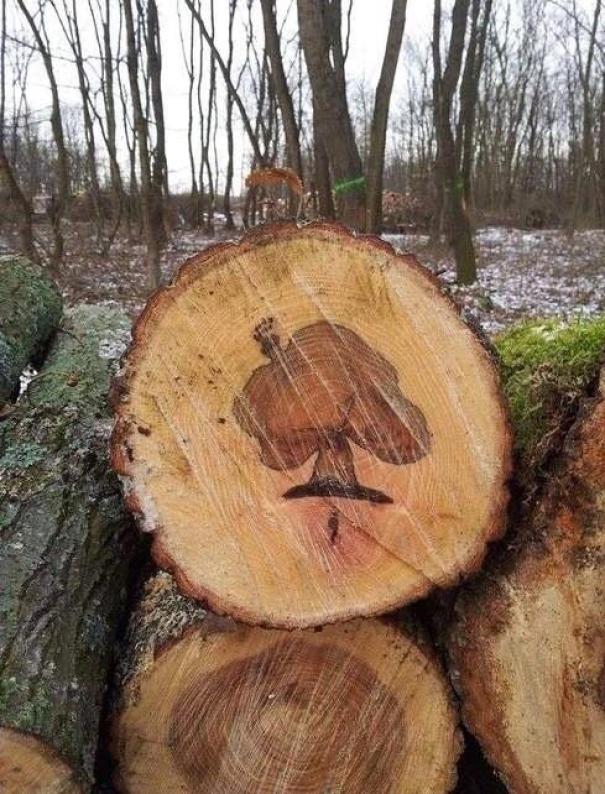
It's coming up on Memorial Day Weekend. While I wish I could say the below is true... I know better. 


Someday I may learn to get away with only doing the Bear Minimum... but I doubt it will be soon.

Monday, May 20, 2013

Where Leaders Are Made

This weekend, District 56 of Toastmasters International held their District Contest. I've participated at many conferences before, however, during this conference I was recognized for an achievement that few accomplish: Distinguished Toastmaster (DTM), pictures to come. 


If you are unfamiliar with Toastmasters International, it is an organization with a focus on improving their member's communication and leadership skills. The first focus is commonly known by nearly everyone who is at least aware of Toastmasters. The second, not so much. In order to address this (among other things), Toastmasters International in recent years re-branded the organization, making the new motto the same as the title of this article.

So What?

Well, there are a long list of requirements to reach Distinguished Toastmaster. The road is separated into two different Tracks, the Communication Track and the Leadership Track (the requirements for both tracks can be found using the links). You have to complete both tracks in order to reach DTM.

In the end, the DTM  certification requires nearly 50 speeches, holding a position in Club and District Leadership, as well as completing something called the High Performance Leadership Project (details in the Leadership Track link), which is basically fulfilling the role of project manager for an event while working with an Event Committee and a Guidance Committee.

In this case, Toastmasters International actually follows well the C4 Principal (most likely without being aware of it). The organization has CONCEIVED a clear path for people to follow in order to improve their skills and reach goals. Not only is the concept COMMUNICATED well, but the whole organization is designed to improve your COMMUNICATION skills; as well as your COMMAND skills by introducing so many different leadership experiences, either as a club member, club officer, or district officer. Finally, Toastmasters International COMPLETES the process by offering evaluations nearly every time the member speaks, as well as in the way that the leadership positions are generally handled. When handled well, I doubt it could be any cleaner.

Thank you Toastmasters for providing me with the opportunity to polish my C4 skills, for providing a path for others to grow in these necessary attributes, and for providing an opportunity for me to meet and work with like minded people.  I am proud to have the designation Distinguished Toastmaster, and I would encourage anyone who reads this to join a club. The time spent is worth it, and the benefits, greater than you can know.

Friday, May 17, 2013

Leadership is...

Digging through the archives again, I came across another old bookmark that I wanted to share:


Can you guess what that leadership quality is?

Pursuit!

http://blogs-images.forbes.com/mikemyatt/files/2013/01/Pursuit-Image1.jpg


I find it hard to argue with this statement. An idea without pursuit isn't attained. Intelligence without a goal to pursue is merely smarts. If you do not Pursue, then you will not ATTAIN.

It is a critical quality. However, there is another that goes hand in hand with Pursuit:

ENDURANCE!


Image courtesy of Sura Nualpradid at FreeDigitalPhotos.net

Without ENDURANCE, pursuit is short lived, and can leave a person short of the goal. You must ENDURE the good and the bad in order to ATTAIN.

A lot of things worth having take PURSUIT and ENDURANCE, nothing in life worth having is easy.

I have many examples in my life: Eagle Scout, Distinguished Toastmasters, even getting a bachelor's degree required Pursuit and Endurance. In fact every project I work on as the PM requires these two qualities.

So what are you working on that requires Pursuit and Endurance? What marathon are you running, and what is the expected reward? I would love to hear from you...

Wednesday, May 15, 2013

Wacky Wednesday - Lazy People

There are two kinds of lazy people: Innovative Lazy, and Lazy Lazy. The second kind are the type of people who everybody thinks of when the term lazy is used. They go home and sit on the couch. They do just enough work to get by in life, maybe.

But the other type is a rarer breed that create truly original ideas:

If you know the source, please let me know, as this came through email
These are the type of people who will spend hours trying to find a way to automate a 5 minute process. They will work on their own time so that they can solve a mild annoyance that repeats, even if it is only quarterly. In fact, that is the inception for the Purchase Order Calculator.

I will take them on my team any day of the week, because they will help everyone in the long run.

Monday, May 13, 2013

Thank You Cards - Why I Carry Them


A couple of weeks ago I mentioned how impressed I was with a hotel manager who sent a handwritten thank you card after a stay at her establishment. Shortly after posting this message, I was talking with a friend who is starting to interview and she mentioned that she types and emails thank you(s) to the interviewer. I asked why she didn’t send a card, and she couldn’t provide a good answer. The email/typing was faster, so that was why she did it.

I have stacks of thank you cards at my desk, in my bag, and even in my car. If I think somebody did something worthwhile, I will take the time to write the card and deliver it to them (even in my illegible handwriting), either personally or through the mail. I went to my desk and returned with a couple of cards, handing them to her.
Image courtesy of Stuart Miles at FreeDigitalPhotos.net


When she asked why, I asked: “How many emails do you have in your inbox?”

“A couple hundred.”

“Have you read them all”

“Yes”

“Do you remember them all?”

“No.”

“What makes you think your interviewer will remember your email?”

That question got a pause. I then pointed out that I had a handwritten thank you note from a person I helped still sitting on my desk several months after the fact (not from the hotel manager). I see it every day and most times have a small thought about the help I gave and the person who wrote the card. An email would have quickly been filed and forgotten. She got the point, and wrote several thank you notes that day.

The world continues to get smaller and the pace faster. If you want to make a connection, you need to do something unique, just like the hotel manager, and now my job seeking friend. Differentiating yourself in a positive and thoughtful way will always bring benefits, even if it doesn’t land the job. At the least it will ensure that people remember who you are. 

Now from a leader perspective, when was the last time you did something for your team? When an event or project was over, did you do anything to make them feel special? How do you COMPLETE the event so that your team wants to work with you again? Perhaps a small but unique gesture will drive the message home. What do you think?

Wednesday, May 8, 2013

Wacky Wednesday - Where We Really Live

We are all familiar with the World Map. It's been on school walls all over the country (and probably the world). Here it is:

Mercator Map
Would it astound you to learn that you aren't where you think you are? What if I said the world looked more like this:

Peters Project Map
Perhaps one of the most amusing moments in The West Wing deals specifically with this. Enjoy:


Monday, May 6, 2013

Don't (Suddenly) Change the Rules on the Players

A long time ago I was involved in a software implementation that was supposed to be revolutionary for the company. There were hired contractors that were software experts, and recruited personnel from inside the company who were Subject Matter Experts (SME). I joined the group late, as a SME about Project Management. The group was only weeks away from the first implementation, and I was "on loan" until the economy started to recover and more projects were available.

During the on-boarding, I was told the same thing that all the SMEs were told. The hours would be long. In order to avoid disruption of the company operations, installations and upgrades would take place during weekends and nights. Also, the implementation schedule after the first location were supposed to be very quick, as it took more than two years to get to the first facility implementation and the timetable needed to be shortened. 

The organization couldn't offer a raise in salary, or comp time for the nights and weekends lost. They did, however, have one incentive:

Image courtesy of Stuart Miles at FreeDigitalPhotos.net

A tiered ladder bonus system to any non-contract workers (i.e. the full time guys and girls). It started at a couple of grand, and capped at over ten thousand per implementation. After each implementation, each SME would get a check, moving one rung further up the ladder. This was supposed to happen for each implementation.

Because I joined late, I didn't get the full bonus, but I did get a bonus. I was surprised and thankful. We started on the second implementation. About two months into the implementation, the overall project team was split into two implementation teams, and another facility was added to the rotation. I was on the Team 1. When the implementation happened, both teams were involved, but only Team 1 received the bonus checks. Team 2 was advised that only the team "responsible for implementation" would receive bonus checks about two weeks prior to implementation.

As soon as the 2nd facility was complete, I was moved quickly to Team 2, and the Team 2 SME moved to Team 1 (as he was more knowledgeable about financial project management and his skills were required for facility 4). Again, I worked nights and weekends. This time, after Go-Live, the Project Sponsor walked around and physically handed out checks to each player... but as he handed out each check, he said that the tier system had changed. It was now drastically reduced, and anyone who moved up a tier found the expected pay cut nearly in half. No reason was given for the change.

As soon as the 3rd facility was complete, guess who got moved back to Team 1? Although my fellow SME was more knowledgeable about financial project management and the software settings, my previous work in the company was directly with the information required for systems entry (this will be a wholly different blog entry... trust me). I worked nights and weekends, trying to get billions of dollars of transactions and information correct for entry into the software. I was the only one who understood it.

About a month before Go-Live for facility 4, I was told that I didn't qualify for the bonus check because I wasn't involved since the beginning of facility 4. I was told this by my immediate supervisor, who looked sheepish and scared about how I would react.

Now I am a good soldier (thank you US Army), I swallowed the pill without blowing up on my immediate supervisor, and asked to speak to management. I was told that he would look into it. I recall him "looking into it" for almost 2 months with lots of "gentle" prodding on my behalf.

On the day of Go-Live, I managed to confront the managing group about it (because they were all present for the implementation). I informed them about what I had been told and asked why my contribution wasn't going to be recognized, considering I was the only one that could accomplish specific tasks. They made excuses and ran.

Two weeks after Go-Live I got another check (after near constant questions and pestering) at the reduced tier system levels. This was the last bonus I received, before moving back to the group that "loaned" me out.

Now, this sounds like a lot of dirty laundry, and I guess you could call it griping, but there is a lesson here, otherwise it wouldn't be a blog entry. This isn't the only time that the "rules" changed suddenly on the team, but it is one of the more dramatic. This destroyed any trust the team had for management, and the conversations between the staff members showed how little everybody cared for management and their decision making process.

How could this have been avoided? COMMUNICATION!

Image courtesy of sheelamohan at FreeDigitalPhotos.net


I am not in a position to dictate whether the changes were or weren't necessary. I was not in the room when these decisions were made. What I can comment on is that the changes were not COMMUNICATED effectively and that bred distrust. This is something a leader cannot afford as it is our most fragile asset.

Let me give you some examples of how this could be avoided:

There was a large overall team meeting, just after the first implementation when they announced the change from one project team to two implementation teams, the leadership should have announced the bonus change as well. A change in the implementation plan and group layout would be a natural time to tell people about bonus changes. NOT just before implementation, when people are expecting the money for the work completed.

How about the time when the Project Sponsor handed out checks? Again, earlier notice is owed to the players. People were counting on those bonus checks to pay debt or go on vacation, and to suddenly learn about the change when the check is in hand is almost as bad as the National Lampoon's Christmas Vacation bonus of the ""Jelly of the Month Club." With no reason given, the staff is left to guess what caused the change, and to start wondering about what future changes may be coming.

Finally, in my specific case, where I had to chase down the check. This shows a lack of COMMAND. If you make a decision, for the good of the project, the team, whatever, YOU HAVE TO OWN IT! Do not make a minion tell the person. Do not duck the questions. And do not run away when confronted.  OWN the decision, give an explanation, and at the very least tell the person (or people) yourself!

All of these things show a lack of respect for your project team, and only generate a negative work environment; especially when people have other viable options. The software package in question is still incredibly popular. The reason for the tiered bonuses in the first place wasn't just to compensate for hours spent, but to keep people interested in reaching the next tier rather than leaving for a more immediate financially appealing opportunity. As experienced implementers, any of the full time employees could have left with minimal notice and probably found better jobs (some did).

Hopefully, you are taking away something from this blog entry. Don't suddenly change the rules on the players during a project. Your team works hard and deserves better. You owe them honesty and transparency, so that they team can adjust to the situation. If not provided, the team is left to speculate, which can only cause future friction.  With everything they do for you, you owe them that much.